

Men's Health and Hormone Education
Cypionate vs Enanthate: Differences, Benefits, Duration, and How to Choose
Oct
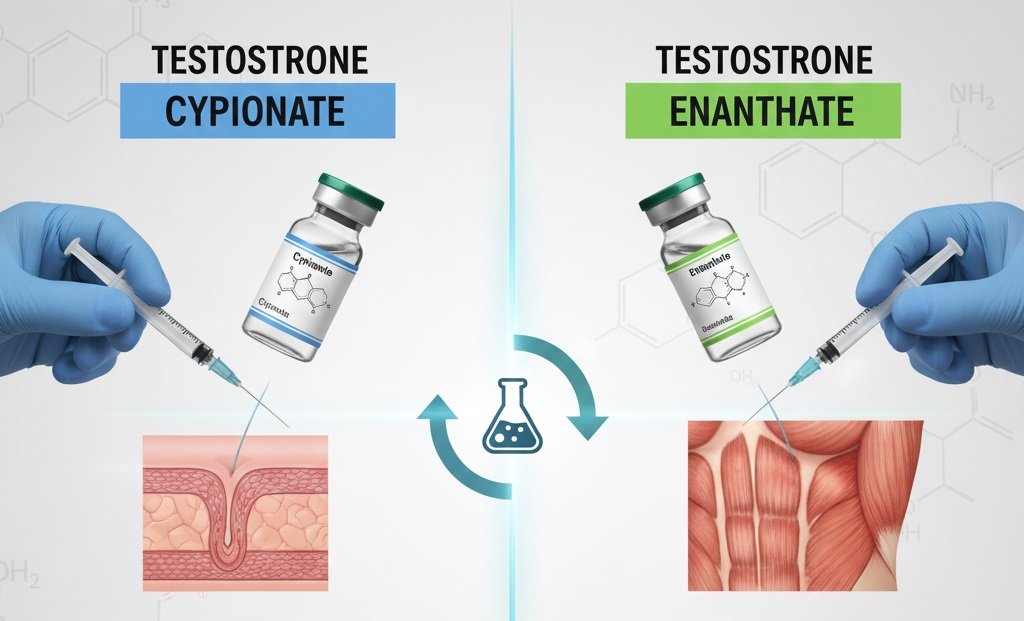
If you have been researching testosterone injections, you have probably come across two common names: Testosterone Cypionate and Testosterone Enanthate. Often shortened to Test C and Test E, both are long-acting testosterone formulations used in medical treatment. Cypionate vs Enanthate
So, when comparing Cypionate vs Enanthate, which one is better? The answer depends on the individual, the prescribed formulation, and the reason for treatment. Both deliver the same active hormone, but they use different esters that affect how testosterone is released into the bloodstream.
The differences are worth understanding, especially if you are researching testosterone replacement therapy (TRT). Although Test C is often described as having a slightly longer half-life, that does not automatically make it more effective or a better choice for everyone.
In this guide, we will look at how the two formulations compare, what they are used for, their potential benefits and drawbacks, and what to consider before discussing treatment with a healthcare professional.
What Are Cypionate and Enanthate?
Before comparing the two, it helps to understand what the names actually mean.
Testosterone is a hormone involved in sexual development, reproductive function, muscle maintenance, bone health, and red blood cell production. The body produces testosterone naturally, although levels can be affected by age, health conditions, medications, and other factors.
Testosterone Cypionate and Testosterone Enanthate are forms of testosterone attached to different ester compounds. These esters influence how the medication is released after injection.
What Is Testosterone Cypionate (Test C)?
Testosterone Cypionate is a long-acting injectable testosterone formulation. Once administered, it is gradually processed by the body, making testosterone available over time.
It is used in testosterone replacement therapy when a person has a confirmed medical need and treatment is appropriate.
Test C is particularly well known in the United States, where it is an established prescription treatment for certain cases of testosterone deficiency.
What Is Testosterone Enanthate (Test E)?
Testosterone Enanthate is another long-acting injectable form of testosterone. Like Cypionate, it releases testosterone gradually and is used in medical treatment for testosterone deficiency in appropriate circumstances.
Its availability and approved uses depend on the country and the specific product.
Although the ester differs, the hormone delivered by Test E is the same testosterone found in Test C. This is why the two medications can have broadly similar effects when they produce comparable testosterone levels.
Cypionate vs Enanthate: The Main Differences
The main difference between Testosterone Cypionate and Testosterone Enanthate is their ester structure and the way each formulation behaves in the body.
Here is a quick comparison of the features most people want to understand.
| Feature | Testosterone Cypionate | Testosterone Enanthate |
|---|---|---|
| Common name | Test C | Test E |
| Ester | Cypionate | Enanthate |
| Active hormone | Testosterone | Testosterone |
| Form | Injectable formulation | Injectable formulation |
| Release profile | Long-acting | Long-acting |
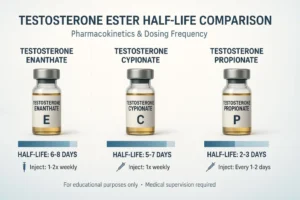
| Approximate intramuscular half-life | Often around 7–8 days | Often around 4–5 days |
| Medical use | Testosterone replacement when indicated | Testosterone replacement when indicated |
| Potential effects | Similar testosterone-related effects | Similar testosterone-related effects |
| Main considerations | Product availability, response, and monitoring | Product availability, response, and monitoring |
Half-life figures are approximate estimates and can vary with the product, administration route, and individual factors. They should not be used to decide an injection schedule.
Which One Has a Longer Half-Life?
Testosterone Cypionate is commonly reported to have a somewhat longer intramuscular half-life than Testosterone Enanthate.
Half-life refers to the time it takes for the amount of a substance in the body to decrease by approximately half. It helps explain how a medication behaves, but it does not tell the whole story about how well a treatment works.
When looking at Testosterone Cypionate vs Enanthate, the difference in half-life is generally less important than the patient’s response, the prescribed formulation, and the results of appropriate monitoring.
Is One Stronger Than the Other?
Neither formulation is inherently stronger in terms of the active hormone. Both deliver testosterone.
The number of milligrams listed on a product label does not always provide a direct comparison of the amount of active testosterone, because the ester contributes to the total molecular weight.
For this reason, the two products should not be compared or substituted based only on the number of milligrams shown on the label. A healthcare professional can assess the actual product and prescription.
Why Do People Choose Test C or Test E?
People may encounter these formulations while researching TRT, investigating symptoms associated with low testosterone, or learning about hormone treatment.
There are several practical reasons one formulation may be selected over the other.
- Availability: One product may be easier to obtain through a licensed pharmacy in a particular country.
- Treatment history: A person who is already responding well to a prescribed formulation may have no medical reason to change.
- Individual response: Symptom control and side effects can differ between individuals.
- Product characteristics: Approved concentrations, formulations, and instructions vary between products.
- Clinical considerations: A healthcare professional considers the person’s health, laboratory results, and treatment goals before recommending a medication.
Popularity on bodybuilding forums or social media does not establish that one formulation is medically superior.
Potential Benefits of Testosterone Cypionate and Enanthate
Both formulations are intended to provide testosterone. For people with confirmed testosterone deficiency, appropriate treatment may help improve some symptoms associated with the condition.
Support for Testosterone Levels
When testosterone levels are consistently low and treatment is medically indicated, either formulation may help bring levels into an appropriate range.
The aim is to treat the underlying deficiency and improve relevant symptoms, rather than simply push testosterone levels as high as possible.
Sexual Health
Testosterone deficiency can contribute to reduced sexual desire in some individuals. Treatment may improve libido when low testosterone is genuinely contributing to the problem.
However, sexual difficulties can have many causes, including medication effects, psychological factors, vascular problems, and other medical conditions. Testosterone is not a guaranteed solution.
Muscle and Bone Health
Testosterone plays a role in maintaining muscle mass and bone density. In people with testosterone deficiency, medically appropriate treatment may help address some effects of low hormone levels.
That does not mean either formulation should be used as a shortcut to muscle growth. Using testosterone without a medical indication can expose a person to unnecessary risks.
Long-Acting Formulations
Both Test C and Test E release testosterone over time. This makes them useful options in certain treatment plans, with the specific administration schedule determined by the prescribed product and the patient’s response.
Test C vs Test E for Testosterone Replacement Therapy
Testosterone replacement therapy, commonly called TRT, is used to treat certain cases of testosterone deficiency.
A diagnosis should not be based on tiredness, reduced gym performance, or low libido alone. These symptoms can occur for many reasons.
Healthcare professionals typically consider symptoms alongside appropriately timed blood tests showing consistently low testosterone. Further testing may be needed to investigate the cause.
When deciding between Test C and Test E for TRT, the clinician may consider:
- The patient’s symptoms and laboratory results.
- The specific product and its approved instructions.
- Other medical conditions and medications.
- Fertility plans.
- Potential adverse effects.
- Follow-up test results and treatment response.
Both formulations may be appropriate, but neither is suitable for everyone.
Side Effects and Safety Considerations
Although Testosterone Cypionate and Testosterone Enanthate have similar intended effects, both can cause adverse reactions. The risks depend on the individual, the formulation, the amount used, and the duration of treatment.
Possible side effects include:
- Acne and oily skin.
- Fluid retention.
- Changes in mood.
- Increased red blood cell production and hematocrit.
- Changes in blood pressure.
- Suppression of natural testosterone production.
- Reduced sperm production and fertility.
- Breast tenderness or enlargement in some individuals.
Testosterone therapy may be unsuitable for people with certain medical conditions. A healthcare professional should review the person’s medical history before treatment.
Monitoring may include testosterone measurements, a complete blood count, blood pressure checks, and other assessments based on age and individual risk.
Anyone experiencing chest pain, sudden shortness of breath, one-sided leg swelling, or other potentially serious symptoms should seek urgent medical attention.
Does Test C Cause Fewer Side Effects Than Test E?
There is no good reason to assume that Testosterone Cypionate automatically causes fewer side effects than Testosterone Enanthate.
Both deliver the same hormone, and many of their potential adverse effects overlap. Differences in individual response, product formulation, and testosterone exposure may matter more than the name of the ester alone.
Pros and Cons of Cypionate vs Enanthate
Both formulations have potential advantages, but each also comes with limitations.
Testosterone Cypionate
Pros
- Long-acting injectable formulation.
- Established medical use in appropriate cases of testosterone deficiency.
- Similar intended hormonal effects to Testosterone Enanthate.
- May be readily available through licensed pharmacies in certain markets.
Cons
- Requires appropriate medical assessment and follow-up.
- Can suppress natural testosterone production and sperm production.
- May contribute to acne, fluid retention, and elevated hematocrit.
- Availability varies between countries.
Testosterone Enanthate
Pros
- Long-acting injectable formulation.
- Established medical use for certain cases of testosterone deficiency.
- Broadly similar intended hormonal effects to Testosterone Cypionate.
- May be more readily available in some healthcare systems.
Cons
- Requires medical supervision and monitoring.
- Can affect fertility and natural hormone production.
- May cause similar adverse effects to Cypionate.
- Product availability and approved instructions vary by location.
Overall, neither option is automatically better. The appropriate choice depends on the medical circumstances and the specific formulation being considered.
How to Decide Which Formulation Is Appropriate
If you are comparing Test C vs Test E because you are considering testosterone treatment, there are a few things worth doing before making a decision.
Start With Proper Testing
Symptoms alone cannot confirm testosterone deficiency. A healthcare professional can recommend the appropriate blood tests and assess whether the results are consistent with your symptoms.
If testosterone is low, additional testing may help identify the cause.
Consider Fertility Before Treatment
One important consideration is fertility. Testosterone therapy can suppress sperm production, which may make conception more difficult.
If you plan to have children, discuss this before starting treatment. A specialist may be able to explain alternative approaches that better fit your goals.
Check the Product and Supplier
Testosterone is a prescription medicine in many countries. Obtain it through a licensed healthcare professional and an authorized pharmacy.
Avoid unverified online sellers, products with questionable labeling, and claims that a particular formulation guarantees rapid muscle growth or has no side effects.
Plan for Follow-Up
Treatment does not end when a prescription is issued. Follow-up appointments and laboratory tests help assess whether treatment is effective and identify potential complications.
Do not change your dose, combine testosterone products, or switch formulations without professional guidance.
Common Problems and What They May Mean
Testosterone Levels Still Seem Low
If symptoms persist during prescribed treatment, several explanations are possible. The diagnosis may need to be reviewed, the timing of laboratory tests may matter, or another health condition may be contributing to the symptoms.
Discuss the results with your healthcare professional rather than increasing the dose yourself.
Acne Develops During Treatment
Testosterone can increase skin oil production and contribute to acne. Mild symptoms may be manageable, but persistent or severe acne deserves medical advice.
Injection-Site Discomfort
Some discomfort can occur after an injection. Severe pain, spreading redness, fever, or significant swelling should be assessed promptly because these symptoms can indicate a complication.
Fertility Becomes a Concern
Testosterone can reduce sperm production. If fertility is important to you, raise the issue with your healthcare professional as early as possible.
Frequently Asked Questions
1. What is the difference between Cypionate and Enanthate?
Cypionate and Enanthate are different ester forms of testosterone. They have somewhat different release profiles, but both deliver the same active hormone and can have similar effects when testosterone exposure is comparable.
2. Is Testosterone Cypionate better than Enanthate?
Neither is universally better. Availability, the prescribed product, individual response, treatment goals, and safety monitoring all influence which formulation may be appropriate.
3. Does Test C last longer than Test E?
Testosterone Cypionate is often reported to have a somewhat longer intramuscular half-life. However, the difference varies by formulation and does not automatically mean it is the better treatment.
4. Can Test C and Test E both be used for TRT?
Both are used in testosterone replacement treatment when medically indicated and permitted under local prescribing rules. A healthcare professional should determine whether treatment is appropriate.
5. Do Test C and Test E have the same side effects?
Their potential side effects overlap because both deliver testosterone. These may include acne, fluid retention, elevated hematocrit, and reduced sperm production.
6. Can someone switch from Cypionate to Enanthate?
A healthcare professional may recommend a switch when appropriate. The products should not be substituted independently because their formulations, concentrations, and prescribed instructions may differ.
7. Do you need blood tests before using testosterone?
Yes. Appropriate assessment helps establish whether testosterone deficiency is present and whether treatment is suitable. Follow-up testing helps monitor treatment response and identify possible adverse effects.
